
Kende's language
Dissolutionism: Kende’s style, between urban memory and dissolution
Creating a mark and then letting it fade away, just as happens to a painted wall or a painted railway carriage.
People often ask me what I mean when I talk about ‘Dissolvismo’. It’s the word I’ve chosen to describe what I’ve been doing on canvas for years: creating a mark and then letting it fade away, just as happens in real life to a painted wall or a painted train carriage. It’s not a label I’ve simply made up off the top of my head — it’s the name I’ve finally given, after a long time, to a process that was already in my hands.
What is Dissolutionism?
We live in a fast-paced world. Everything changes faster than we can process, and memories pile up on top of one another before they have even had a chance to settle — layers of memory that overlap without anyone having time to distinguish between them.
For me, painting is the act of pausing long enough to let one layer settle before the next one goes on: building, erasing, rebuilding, until I bring onto the canvas what normally flows away without anyone noticing.
It is not nostalgia for a slower-paced past. It is a pause imposed on a process that, in real life, would have none. And just as with objects that age well — wood, leather, anything that bears the marks of those who have used it — what remains is not a flaw: it is what gives the material its value. I call this way of working ‘Dissolvism’.
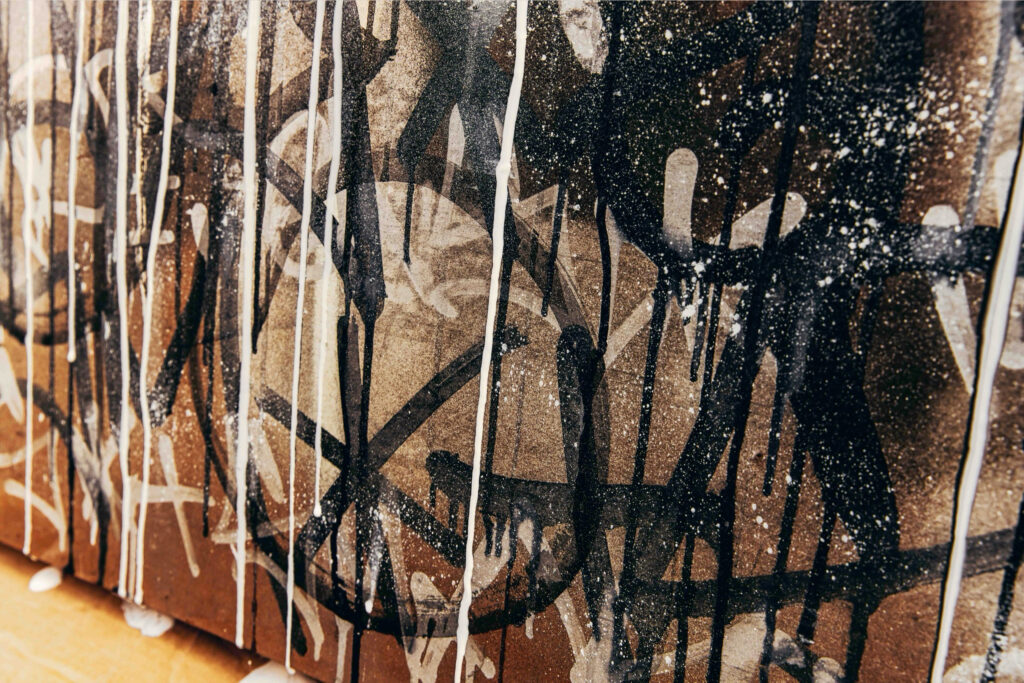
‘Dissolutionism’ is the practice of transforming dissolution — of the urban sign, of time, of collective memory — into pictorial matter.
It does not represent ruin. It does not commemorate it with nostalgia. It makes use of it: the paint applied and then partly removed, the layer built upon another already worn layer, the surface worked and reworked several times until it bears the same patina as a wall that has been exposed for years. In this sense, to dissolve is not to destroy: it is the process through which something ceases to be merely itself and begins to be, at the same time, a trace of itself.
Why ‘Dissolutionism’, and not just calligraffiti?
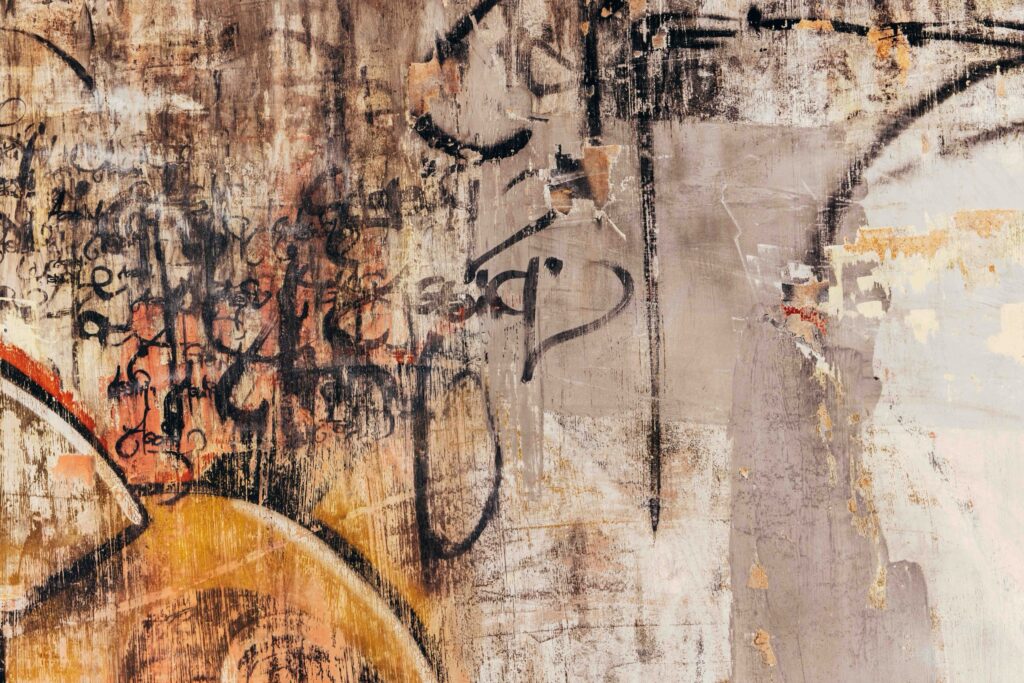
Calligraffiti stems from the fusion of the gestural nature of graffiti and the discipline of classical calligraphy. In this discipline, the focus is almost always on the stroke as it is drawn: its energy, its speed, its precision.
Dissolutionism shifts the focus elsewhere — not to the moment when the mark is made, but to the moment when it begins to fade. I do not work to capture the gesture at its clearest moment: I work to bring onto the canvas what happens afterwards, when that mark is covered up, eroded, forgotten. It is the same visual alphabet as calligraffiti, read in reverse — not the birth of the mark, but its disappearance.
Why this name: Dissolutionism
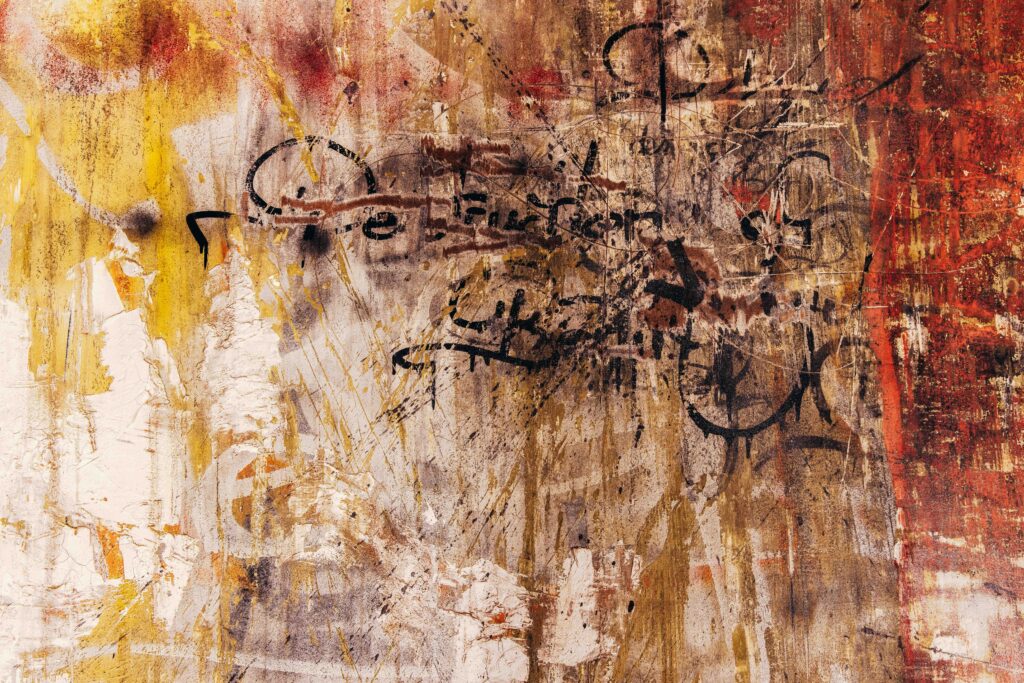
I have always referred to my work as ‘calligraffiti’. But looking at my pieces, I realised that I had strayed quite far from the original concept of calligraffiti, and I felt the need to find a precise definition for what I was doing.
It happened as I applied the paint and scraped away again and again with metal spatulas in different directions and with varying intensity: I watched the words fade away brushstroke by brushstroke, and I realised that this was precisely the heart of my work — the elements that, layer by layer, dissolved. Dissolution.
Materials, technique and colour palette
I work in mixed media on wood – it’s not just painting: textural interventions and drips that physically build up the layers I mention in the introduction — a process of addition and subtraction, where each stroke leaves a trace that is partially covered by the next.
I prefer the large horizontal format, a composition that evokes the experience of viewing an urban wall in its entirety, rather than that of a traditional painting.
The colour palette varies from work to work — it is not a fixed element of my artistic practice — but the distinctive mark always remains the same: a surface that is built up and then partially erased, until it bears the same signs of wear and tear as a wall that has been exposed for years.
How I work
My works are almost always commissioned, designed to tell the story of a specific space or of those who live there. The best results are achieved when the artwork is incorporated into the project right from the initial design stage — not as an accessory chosen at the last minute to fill a wall that is already furnished, but as an element that helps to create the atmosphere alongside everything else: the light, the materials, the colours and the function of the room. Only in this way can I truly interpret the atmosphere, the spaces and the wishes of those who will live in that place, rather than merely decorating it.
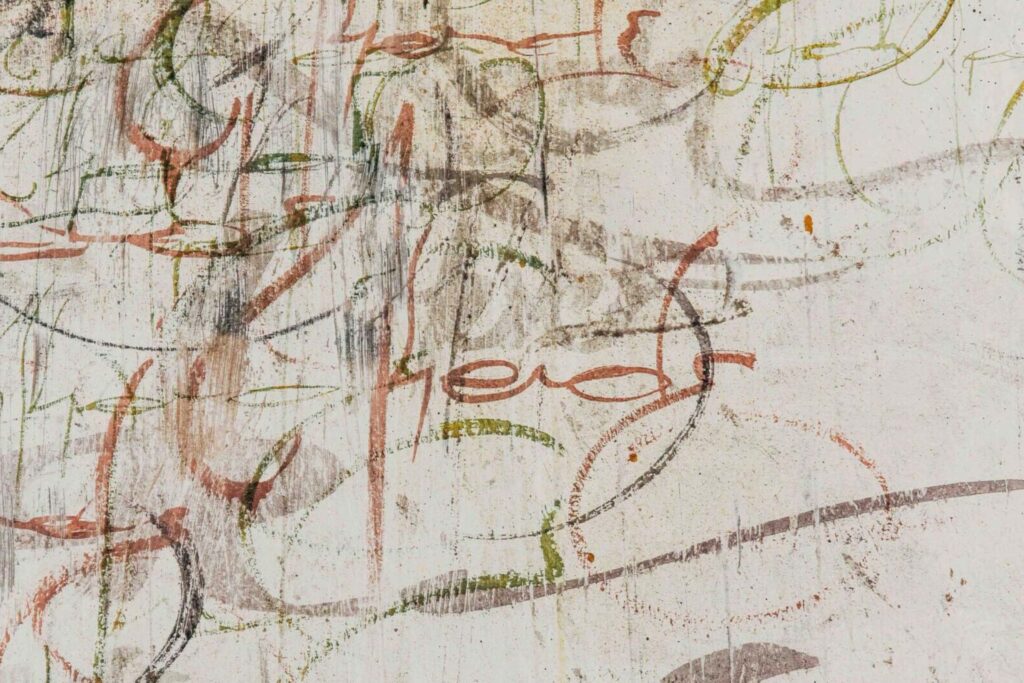
The method remains the same as ever. I treat erosion, layering and fading as compositional tools, not as effects to be corrected — I control some of these forces myself, deciding where to build up and where to remove; others I do not, because the materials themselves continue to react over time.
I work on surfaces which, unlike a wall or a railway carriage that are bound to be repainted or washed at some point, remain: the canvas and the panel become the only place where that memory can truly endure. I am not seeking the immediate legibility of the mark; I am seeking its presence — something that can still be recognised even when it can no longer be read in its entirety.
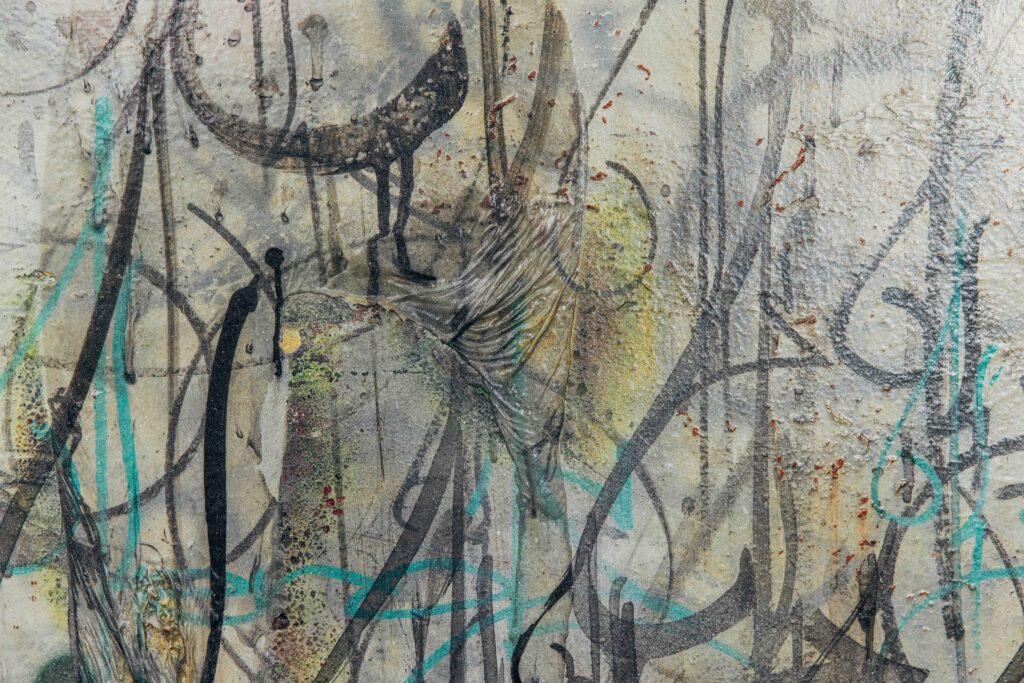
Each piece, rather than simply being a decorative image, is a small archive: a way of bringing into the home the memory of a place, a moment, and those who will live in that space.
Discover my work
The artworks produced in this space are available in limited editions on the website, or can be commissioned and bespoke-designed to suit the space in which they will be displayed.